

Time data is the foundational input that converts recorded labor hours into accurate invoices and drives effective project budget management. Every hour a team member logs against a task either earns revenue or consumes budget. Without reliable time records, project managers and finance professionals are billing blind. Tools like Operating.app and Rocketlane have built entire billing workflows around this principle, and frameworks like Earned Value Management (EVM) depend on it entirely. The role of time data in project billing extends far beyond payroll: it determines invoice accuracy, client trust, and your ability to forecast final project costs before it is too late to act.
How does accurate task-level time tracking affect project billing accuracy?
Task-level time tracking is the difference between an invoice a client approves on first review and one that triggers a dispute. When time entries are coded to specific tasks rather than to a project as a whole, each line item on an invoice maps directly to deliverable work. Clients can see exactly what they are paying for. That transparency reduces invoice disputes and shortens the approval cycle.
The critical coding decision is billable versus non-billable. Every time entry must carry that designation at the moment of capture, not at month-end. When a team member logs four hours on a client call and two hours on internal admin under the same project code, lumping them together inflates the invoice. Separating them at entry time keeps billing clean and auditable.
Weekly timesheet submission creates a rolling five-day blind spot. Misclassification risks that surface during invoice review can trace back to entries logged days earlier, when the context of the work is already fading. Daily submission closes that gap. It also means that when a billing dispute arises, your audit trail is current and specific.
- Code billable vs. non-billable at entry time, not during invoice review.
- Attach time entries to task IDs, not just project codes, for line-item auditability.
- Submit timesheets daily to reduce the blind spot between work performed and work recorded.
- Require mandatory fields such as task code, billing type, and rate category before a timesheet can be saved.
- Run weekly approval cycles so month-end close becomes a verification step, not a data chase.
Pro Tip: Set your time tracking tool to block submission of any entry missing a billing code. Catching that gap at entry time costs seconds. Catching it during invoice review costs hours and client goodwill.
SAP SuccessFactors confirms that time data ties labor to billable work in ways that go beyond payroll accuracy. The downstream effect reaches revenue recognition and client relationships directly.
What role do timestamp policies play in billing integrity?
Timestamp accuracy is the least discussed and most financially damaging variable in project billing. The core issue is the difference between event occurrence time and ingestion time. An hour of work completed at 11:59 PM on the last day of a billing period must be recorded in that period, not the next one, regardless of when the system processes it.

Billing event schema design guidance from Abaxus identifies this as a contract-level policy decision, not a technical afterthought. Organizations that leave timestamp handling undefined end up with systematic boundary errors that compound across every billing cycle. The financial exposure from timestamp mismatches between metering and billing systems can reach $144,000 per year across large account portfolios. That figure reflects how small daily gaps multiply when usage crosses period boundaries.
Three timestamp policies cover most scenarios:
- Grace windows. Allow events arriving within a defined window after period close to be credited to the prior period. This handles minor ingestion delays without reopening closed invoices.
- Deferrals. Events arriving after the grace window are deferred to the next billing period. This keeps closed periods clean but requires clear client communication.
- Period reopenings. The most accurate but most operationally expensive option. Reserve this for high-value contracts where a single misallocated entry has material financial impact.
Pro Tip: Write your timestamp policy into the contract, not just the internal runbook. When a client disputes a charge that crossed a period boundary, a documented policy is your fastest path to resolution.
The hardest billing bugs come from timestamp boundary semantics, not arithmetic errors. Getting the math right on an invoice means nothing if the underlying time events are assigned to the wrong period.
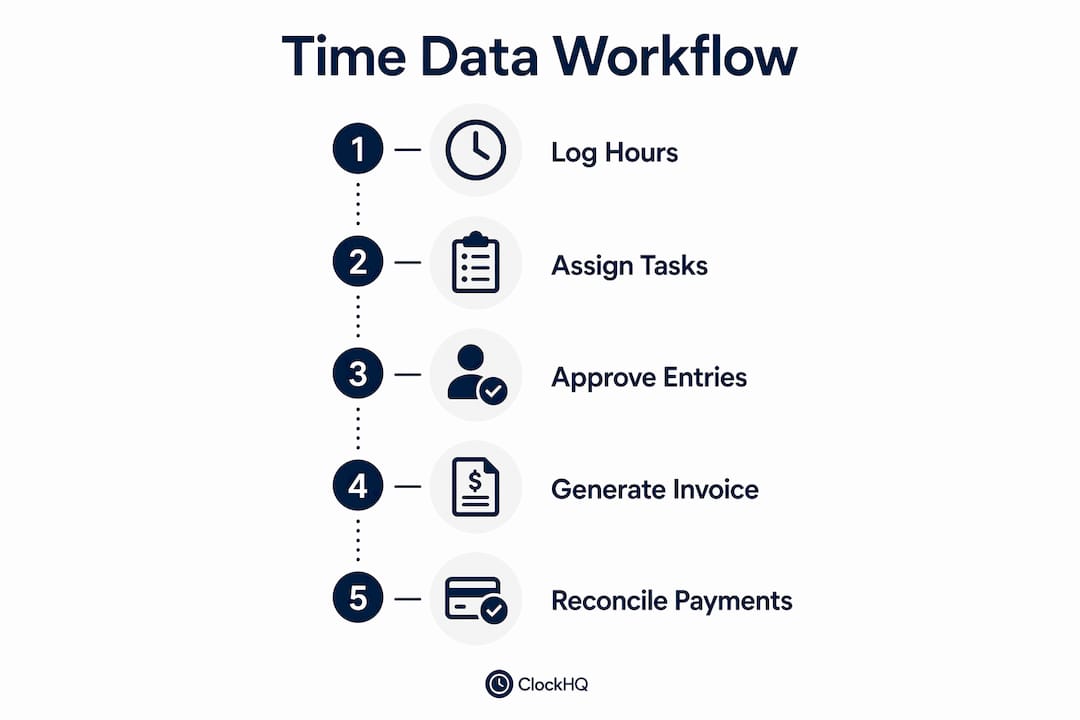
How does time data integration support budget forecasting?
Earned Value Management is the industry standard framework for connecting time data to project cost forecasting. EVM uses three core metrics: Planned Value (PV), Earned Value (EV), and Actual Cost (AC). Each one requires accurate time entries to produce a meaningful number. Without reliable time data, EVM calculations are guesswork dressed up as analysis.
Oracle Primavera Unifier supports EVM natively, allowing project managers to calculate Cost Performance Index (CPI) and Schedule Performance Index (SPI) from live time data. CPI tells you how much budget you are consuming per dollar of work completed. A CPI below 1.0 means you are overspending. Catching that signal in week three of a twelve-week project gives you time to act. Catching it at project close gives you nothing but a post-mortem.
| EVM Metric | What it measures | What it requires |
|---|---|---|
| Planned Value (PV) | Budgeted cost of scheduled work | Baseline schedule and cost plan |
| Earned Value (EV) | Budgeted cost of work completed | Accurate task completion and time entries |
| Actual Cost (AC) | Real cost incurred to date | Approved timesheets and expense records |
| Cost Performance Index (CPI) | Budget efficiency (EV ÷ AC) | Both EV and AC from verified time data |
| Estimate at Completion (EAC) | Forecasted final project cost | CPI derived from current time records |
EVM enables proactive forecasting by combining scope, schedule, and cost into a single performance baseline. That baseline only holds if the time entries feeding it are accurate and timely.
- Finance teams get a real-time view of cost efficiency without waiting for month-end reports.
- Project managers can adjust resource allocation before budget overruns become irreversible.
- Clients on time-and-materials contracts receive forecasts grounded in actual performance data, not estimates.
The connection between actual vs. scheduled hours and EVM accuracy is direct. A project running 20% over scheduled hours but only 10% over budget has a story to tell. That story only exists if the time data is there to tell it.
What are the best practices for managing time data in project billing?
Most invoice errors trace back to data mapping gaps, not calculation mistakes. Missing rate cards and incorrect billing codes are the two most common culprits. A time entry with no rate card attached shows zero revenue in billing reports. Finance teams then face a reconciliation problem that could have been prevented at the point of entry.
The fix is validation at entry time. Require rate category, billing code, and task ID before a timesheet saves. Automated integration checks between your time tracking system and your billing platform catch mapping errors before they reach an invoice. Catching them after the invoice is sent costs client trust.
Approval cadence matters as much as entry quality. Weekly timesheet approvals turn month-end close into a verification step rather than a frantic data chase. Monthly batch processing means errors accumulate for four weeks before anyone reviews them. By then, the team member who logged the entry may not remember the context.
| Approach | Weekly approvals | Monthly batch processing |
|---|---|---|
| Error detection speed | Within days of entry | Up to 30 days after entry |
| Month-end close effort | Low (verification only) | High (data chase required) |
| Invoice dispute risk | Lower | Higher |
| Audit trail quality | Current and specific | Stale and harder to reconstruct |
Reconciliation between your time tracking system and billing platform should run on the same weekly cycle. Compare logged hours against billed hours by project and task. Any gap signals either a missing entry, a rate card error, or a timestamp boundary issue. Addressing gaps weekly keeps them small. Addressing them monthly turns them into write-offs.
Work order timesheets that connect time records directly to invoice line items give clients the transparency they need to approve invoices faster. That connection also creates the audit trail your finance team needs if a dispute arises months later.
Pro Tip: Build a required-fields checklist into your timesheet template: task code, billing type, rate category, and project phase. Any entry missing a field should trigger an automatic flag before submission, not after approval.
Key Takeaways
Accurate time data is the single most controllable factor in project billing quality. Organizations that treat time entry as an administrative task rather than a financial control point consistently face higher dispute rates, slower invoice approvals, and weaker budget forecasts.
| Point | Details |
|---|---|
| Task-level coding prevents disputes | Tag every entry as billable or non-billable at the moment of capture, not at invoice review. |
| Timestamp policies protect period integrity | Define grace windows or deferral rules in the contract to prevent systematic boundary errors. |
| EVM requires verified time data | Metrics like CPI and EAC are only reliable when the underlying time entries are accurate and approved. |
| Weekly approvals reduce billing errors | Reviewing timesheets weekly turns month-end close into verification rather than error correction. |
| Validation at entry time stops mapping gaps | Enforce required fields like rate cards and billing codes before a timesheet can be saved. |
Why time data governance deserves a seat at the project kickoff table
Most billing problems I have seen in professional services firms were not caused by dishonest time entries or bad math. They were caused by decisions that were never made. Nobody defined whether the timestamp on a time entry meant when the work started, when it ended, or when it was submitted. Nobody decided whether internal review hours were billable. Nobody set a rule for what happens to an entry that arrives after the billing period closes.
Those gaps feel minor at project kickoff. By week six, they are the reason your finance team is rebuilding three weeks of timesheet history to resolve a client dispute over $4,000. I have watched project managers and finance professionals spend more time reconstructing billing records than they would have spent building the governance rules in the first place.
The shift I advocate for is treating time data as a financial control, not a reporting afterthought. That means daily submissions, weekly approvals, and timestamp policies written into the contract before the first hour is logged. It also means finance and project management sitting in the same room at kickoff to agree on billing codes, rate categories, and approval workflows. When those two functions operate in separate silos, the billing system inherits every gap between them.
The tools are not the hard part. Whether you use Oracle Primavera, Operating.app, or a purpose-built workforce platform, the software will do what you configure it to do. The hard part is the governance. Get that right first, and the real-time labor data your tools produce will actually mean something.
— noa
Clockhq makes task-level time tracking simple for billing teams
Project managers and finance professionals need time data they can trust before an invoice goes out. Clockhq is a workforce management platform built for exactly that: real-time, task-level time tracking with timesheet approval workflows that keep billing data clean from entry to invoice.
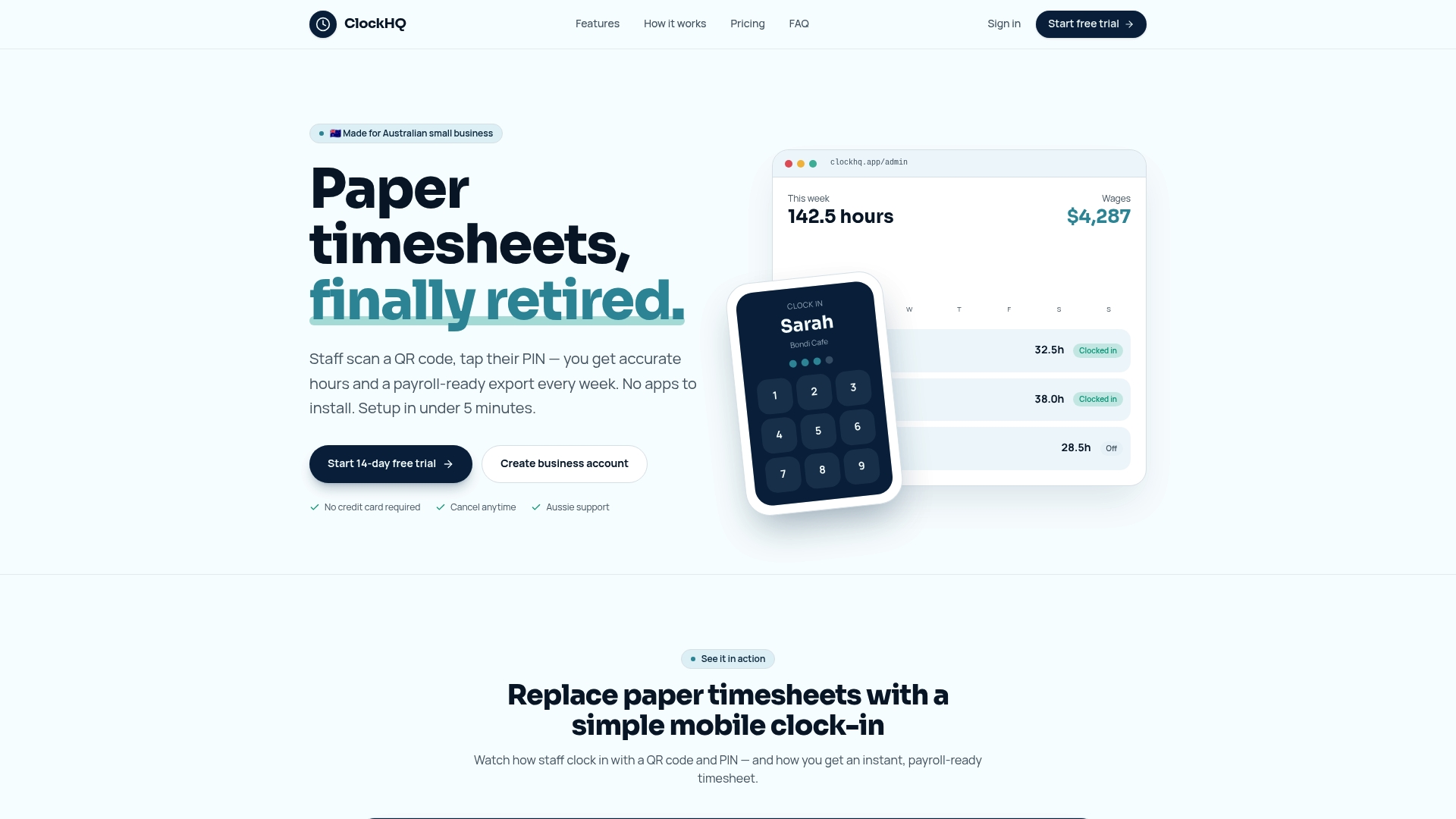
With Clockhq, every hour logged carries the task code, billing type, and rate category your finance team needs to generate accurate invoices without manual reconciliation. The platform runs on mobile and desktop, so field teams and remote staff submit timesheets the same day the work happens. Approval workflows run on a weekly cycle by default, which means your timesheet data is audit-ready before month-end close begins. For teams managing time-and-materials contracts or EVM-based projects, Clockhq removes the data quality risk that sits between labor hours and client invoices.
FAQ
What is the role of time data in project billing?
Time data is the direct input that converts logged labor hours into billable invoice amounts. Without accurate time records tied to tasks and rate cards, invoices cannot reflect the true cost of work delivered.
How does task-level tracking reduce invoice disputes?
Coding each time entry to a specific task with a billable or non-billable designation gives clients line-item visibility into what they are paying for. That transparency speeds up approvals and reduces back-and-forth over invoice accuracy.
Why do timestamp errors cause billing problems?
An event logged at the wrong time can be assigned to the wrong billing period, creating revenue mismatches that compound across multiple cycles. Defining grace windows and deferral rules at the contract level prevents these systematic errors.
How does time data connect to Earned Value Management?
EVM metrics like Earned Value and Cost Performance Index are calculated directly from approved time entries. Inaccurate or delayed time records produce unreliable CPI and EAC figures, which undermines budget forecasting.
How often should timesheets be approved for accurate billing?
Weekly approval cycles produce the cleanest billing data. They catch errors while context is fresh, reduce month-end reconciliation effort, and lower the risk of invoice disputes caused by stale or misclassified entries.