

Accurate employee time records are the single most powerful tool a business owner or HR manager holds when a wage dispute reaches a hearing room. The role of time tracking in wage disputes extends far beyond operational scheduling. Under the Fair Labor Standards Act (FLSA), employers must keep accurate records of hours worked and wages paid, and those records become the primary evidence courts and agencies examine when an employee files a claim for unpaid wages or overtime. Without them, your defense collapses before it begins. This guide explains exactly how time records shape legal outcomes, where common tracking failures create liability, and what practices protect your business.
How time tracking supports wage dispute resolution
Time tracking is not just an operational tool. It functions as an evidentiary system, and complete, accurate records empower employers to defend wage claims effectively. When a former employee alleges unpaid overtime, the first thing a Department of Labor investigator or a plaintiff's attorney requests is your time and payroll records. If those records are thorough, timestamped, and consistent with payroll, you have a defense. If they are missing, incomplete, or contradicted by payroll data, you are already at a disadvantage.

Courts apply a specific framework when records are absent. When records are missing, courts allow employee estimations and shift the burden to employers to disprove those claims. That means a worker can testify, "I worked 50 hours every week for two years," and without contradicting documentation, you may be required to pay the difference. The California Division of Labor Standards Enforcement (DLSE) operates on the same principle: wage claim investigations rely heavily on documented time and wage evidence, and employers who cannot produce records face a presumption of violation.
The practical stakes are significant. Consider a retail manager who disputes an employee's claim of 12 unpaid overtime hours per month over 18 months. With a digital time tracking system that logs clock-in and clock-out to the minute, the employer can produce a complete record and resolve the dispute quickly. Without it, the employer faces a potential back-pay award calculated entirely on the employee's recollection.
Key reasons accurate time records matter in dispute resolution:
- Documented hours provide a factual baseline that courts and agencies treat as primary evidence.
- Payroll reconciliation against time records demonstrates consistent, good-faith compliance.
- Timestamped entries prevent employees from inflating hours retroactively.
- Audit trails show when records were created or modified, protecting against claims of falsification.
Pro Tip: Configure your time tracking software to generate automatic weekly summaries and require manager sign-off. This creates a contemporaneous record that carries far more legal weight than reconstructed data.
Common time tracking issues that lead to wage disputes
Most wage disputes do not originate from deliberate fraud. They come from flawed systems and poorly designed policies that quietly erode employee pay over time. Understanding these failure points is the first step toward eliminating them.
The most legally dangerous practice is biased clock rounding. Systematic rounding that reduces employees' recorded time can lead to wage violation claims, particularly when it repeatedly pushes workers below the overtime threshold. A policy that rounds clock-in times forward to the nearest 15 minutes and clock-out times backward to the nearest 15 minutes sounds neutral on paper. In practice, it consistently shaves minutes from every shift. Across a workforce of 50 employees over a year, that pattern can produce statistically significant underpayment. Courts and plaintiffs' attorneys know how to calculate this.
"The pattern and implementation of rounding policies matter as much as policy text. Biased rounding creates legal risk regardless of intent." — PLBH
The four most common time tracking failures that generate wage claims are:
- Biased rounding policies that consistently reduce recorded hours rather than averaging out over time.
- Missing records for specific pay periods, which courts treat as evidence of non-compliance rather than administrative error.
- Failure to capture all compensable time, including pre-shift setup, post-shift cleanup, and mandatory training sessions.
- Inconsistent overtime calculations caused by mismatches between time records and payroll software configurations.
For a deeper look at how clock-in irregularities compound into larger compliance problems, the patterns in retail environments apply broadly across industries. The same rounding and gap issues appear in hospitality, healthcare, and logistics.
How do meal period records affect wage claims?
Meal period disputes represent a distinct and growing category of wage claims, particularly in California and other states with mandatory meal break laws. The evidentiary standard here is precise: meal period compliance disputes turn primarily on the accuracy of time records and premium payments rather than just policy language.
The California Supreme Court's ruling in Donohue v. AMN Services established a rebuttable presumption framework. When time records show a missed or short meal period, courts presume a violation occurred. The employer must then prove the employee voluntarily waived the break. Without separate tracking of meal break start and stop times, that proof is nearly impossible to produce.
The table below shows how different record states affect your legal position in a meal period dispute:
| Record state | Legal presumption | Employer burden |
|---|---|---|
| Complete meal break times logged | No violation presumed | Minimal. Records speak for themselves. |
| Short break recorded (under 30 min) | Violation presumed | Must prove employee voluntarily waived break. |
| No meal break record at all | Violation presumed | Must disprove claim with alternative evidence. |
| Premium payment logged separately | Compliance demonstrated | Reduced exposure even if break was short. |
Meal-period time records showing missed or short breaks trigger evidentiary presumptions against employers unless compliance is proven. This means your time tracking system must capture more than just shift start and end. It needs to record meal break start time, meal break end time, and any premium payments made when a break was missed or cut short.
Pro Tip: Treat meal premium payments as a separate line item in your payroll records, not just a note in the time entry. Separate documentation of premiums paid is the clearest way to demonstrate good-faith compliance when a break was missed.
Best practices for time tracking that prevent wage disputes
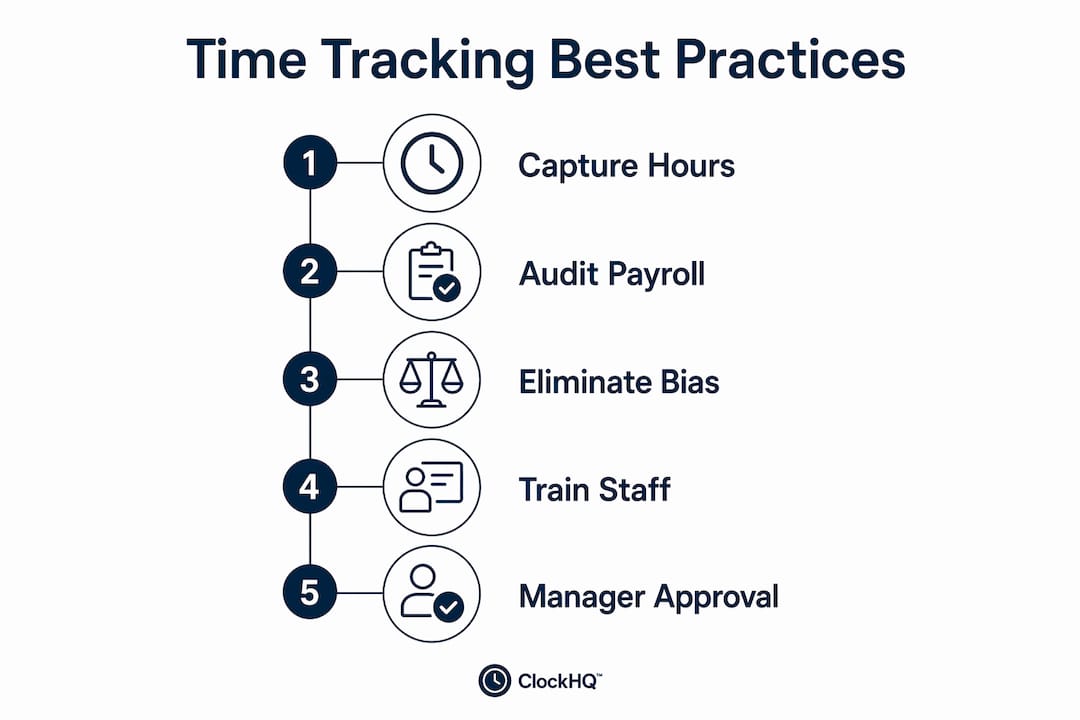
Preventing a dispute is always cheaper than defending one. The importance of time tracking as a legal compliance function means your system design decisions directly affect your litigation exposure. These practices address the most common failure points.
Build a complete and consistent record from day one
Every hour worked must be captured, including time outside the core shift. Pre-shift briefings, mandatory safety checks, and post-shift reporting are all compensable under the FLSA if the employer requires them. Configure your time tracking software to allow employees to log these activities separately, so the record reflects actual work time rather than scheduled shift time.
Audit time records against payroll every pay period
Routine auditing and reconciliation of time tracking data with payroll reduces wage dispute exposure and improves compliance readiness. Run a comparison report every pay period that flags any employee whose paid hours differ from recorded hours by more than a defined threshold. Investigate every discrepancy before payroll closes, not after a claim is filed. For field crews, reducing timesheet errors through GPS-verified clock-ins adds another layer of audit integrity.
Configure your system to eliminate rounding bias
If your time tracking software uses rounding, verify that the rounding policy averages out over time rather than consistently favoring the employer. The safest approach is to eliminate rounding entirely and capture time to the nearest minute. Most modern time tracking software supports this configuration without additional cost.
Train employees and managers on time tracking policy
Clear written policies on how and when to clock in and out reduce disputes before they start. Employees who understand the rules are less likely to claim they were not paid for time they did not record. Managers who approve timesheets weekly create a contemporaneous record that carries significant legal weight. Document the training and keep sign-off records.
Additional practices that reduce wage claim risk:
- Require employees to review and approve their own time records each pay period.
- Store time records for at least three years, the minimum FLSA retention requirement, and longer in states with extended statutes of limitations.
- Use time tracking software that produces tamper-evident logs showing when entries were created or edited.
- Integrate your time tracking system directly with payroll to eliminate manual data entry errors.
Understanding how timesheet disputes escalate when records are incomplete reinforces why these practices matter before a claim is ever filed.
Key takeaways
Accurate, complete time records are the foundation of every successful wage dispute defense and the most reliable way to prevent claims from reaching litigation.
| Point | Details |
|---|---|
| Records are primary evidence | Courts and agencies treat time records as the first and most credible evidence in wage claims. |
| Missing records shift the burden | Without complete records, courts allow employee estimates and require employers to disprove them. |
| Rounding policies carry legal risk | Biased rounding that consistently reduces hours can produce systematic underpayment and trigger claims. |
| Meal breaks need separate tracking | Log meal break start and stop times and premium payments as distinct fields, not just shift totals. |
| Auditing prevents disputes | Reconciling time records with payroll every pay period catches errors before they become claims. |
Why I think most businesses underestimate their time tracking exposure
Most business owners I speak with treat time tracking as a scheduling convenience. They set up a system, train employees to use it, and assume the problem is solved. The legal reality is more demanding than that.
The cases that result in the largest back-pay awards are rarely about employers who deliberately underpaid workers. They are about employers who had systems that quietly failed. A rounding policy that looked neutral on paper. A meal break field that was never configured. A payroll integration that dropped a decimal. These are operational failures with legal consequences, and they are entirely preventable.
What I have seen work consistently is treating time tracking as part of an evidentiary system from the moment you configure it. That means asking not just "does this record hours?" but "could I defend every entry in this record in front of a judge?" When you design your system with that question in mind, the gaps become obvious before they become liabilities.
The other mistake I see regularly is assuming that a written policy protects you. It does not. Courts look at what actually happened, not what your handbook says should happen. Your time records are the proof of what actually happened. If they do not tell a consistent, complete story, your policy is irrelevant.
— noa
How Clockhq helps you stay protected from wage claims
Clockhq is built for exactly the compliance demands this article describes. The platform captures clock-in and clock-out times to the minute, logs meal break start and stop times as separate fields, and generates tamper-evident audit trails that hold up in investigations. Every timesheet requires manager approval before payroll, creating the contemporaneous sign-off record that carries legal weight.
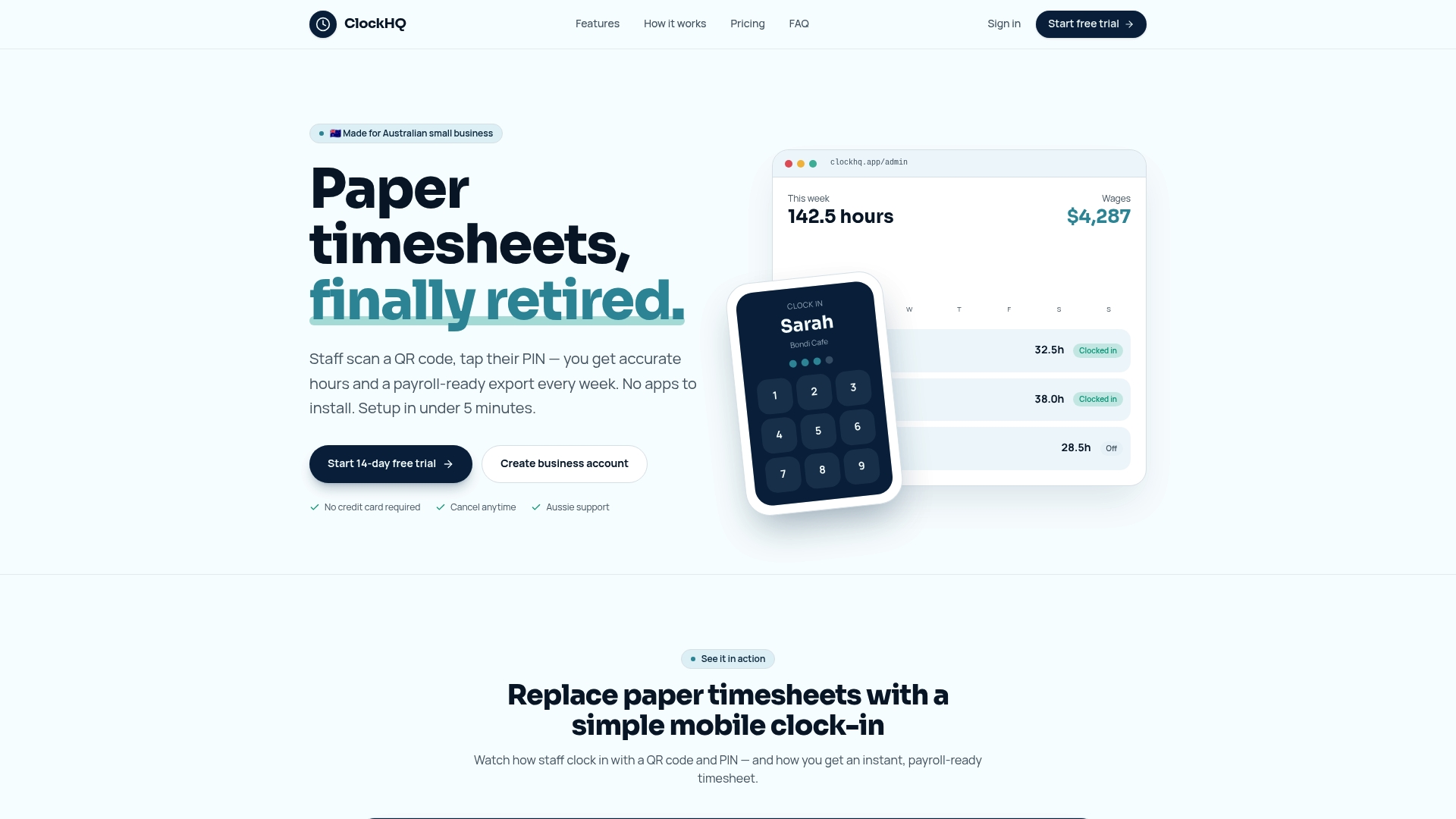
For business owners and HR managers who need to reduce wage claim exposure without adding administrative overhead, Clockhq delivers accurate, audit-ready records from a single platform on mobile or desktop. You can also review wage determination penalties to understand the full cost of non-compliance before your next payroll cycle. Visit clockhq.app to see how straightforward compliant timekeeping can be.
FAQ
What is the role of time tracking in wage disputes?
Time tracking provides the documented evidence that courts and labor agencies use to evaluate wage claims. Accurate employee time records allow employers to demonstrate compliance with the FLSA and state labor laws, while missing or incomplete records shift the legal burden to the employer.
What happens if an employer has no time records during a wage dispute?
When records are missing, courts apply evidentiary presumptions that allow employees to estimate their hours worked, and the employer must disprove those estimates. The New Jersey Supreme Court's ruling in Lopez v. Marmic LLC confirmed that lacking comprehensive records makes defending wage claims significantly harder.
Can a rounding policy cause a wage violation?
Yes. Rounding that consistently reduces recorded work time, even if the policy appears neutral, can produce systematic underpayment and trigger overtime violation claims. Courts examine the statistical pattern of rounding outcomes, not just the written policy.
How long must employers keep time records?
The FLSA requires employers to retain payroll and time records for at least three years. Many states impose longer retention periods, so HR managers should verify the requirements in every state where they employ workers.
Do meal break records need to be tracked separately from shift hours?
Yes. Under the Donohue v. AMN Services framework, meal period time records must show break start and stop times as distinct entries. Total shift hours alone are not sufficient to rebut a presumption of meal period violation.