

Every U.S. employer with commission-paid workers must track hours and fold those commissions into the regular-rate calculation before running overtime — that is the law under the Fair Labor Standards Act. No exceptions unless you have documented proof of a valid exemption. Here is what to do right now:
- Start a single audit-ready time source. One system, one record. Split logs across spreadsheets and a POS create gaps that cost you in audits.
- Tag commissionable jobs in your time and payroll system. Every commission event needs a matching clock-in/out tied to a job or ticket ID.
- Run a weekly regular-rate check before payroll closes. Add commissions to all other earnings for the week, divide by total hours, and confirm overtime is paid at 1.5x that rate.
The U.S. Department of Labor (DOL) and the FLSA are your primary authorities here. State rules can add requirements on top of federal law, so check your state labor department before finalizing any policy.
Table of Contents
- What does the FLSA actually require for commission workers?
- How do you calculate the regular rate when commissions are involved?
- Which methods actually work for recording commission workers' hours?
- What payroll mistakes do employers make with commission pay?
- How do you build a reconciliation process that holds up in an audit?
- What should your written commission and timekeeping policy include?
- How do you roll out hour tracking for commission staff without disrupting operations?
- How Clockhq ties time records directly to commission events
- Key Takeaways
- The case for treating time tracking as a pay-communication tool, not a compliance chore
- Clockhq makes commission-hour compliance straightforward
- Authoritative sources and further reading
What does the FLSA actually require for commission workers?
The FLSA sets three baseline obligations for most employers: record hours worked, compute a correct regular rate each workweek, and pay overtime at 1.5x that rate for any hours over 40. Commissions are not a loophole. Under 29 C.F.R. §778.117, commissions paid for a single workweek are included in that week's regular rate. Commissions covering multiple weeks get allocated back to the weeks they were earned, then the regular rate for each affected week is recalculated.
There is one significant exemption worth knowing: Section 7(i) of the FLSA covers retail and service establishment employees. To qualify, an employer must satisfy all three conditions:
- The employee's regular rate must exceed 1.5x the federal minimum wage.
- The employee's earnings over a representative period must predominantly come from commissions.
- The employer must be a retail or service establishment as defined by the DOL.
Miss any one of those three and overtime must be paid at time-and-one-half. The representative period must be at least one month but no longer than one year. Critically, you still need complete hours and earnings records to prove the exemption holds — the exemption does not eliminate the recordkeeping obligation, it depends on it.
State rules layer on top. The Texas Workforce Commission, for example, publishes its own regular-rate guidance for commission workers that HR teams in Texas should read alongside the federal rules. California, New York, and other states have additional break, recordkeeping, or overtime thresholds. Always verify with your state labor department.
Key rule: Assuming commission pay equals exempt status is the most common and most costly mistake HR makes with commission workers. Documentation and representative-period testing are required to apply any exemption.
How do you calculate the regular rate when commissions are involved?
The math is straightforward once you know the formula. The regular rate equals total compensation for the workweek divided by total hours worked that week. Commissions count as part of total compensation.
Step-by-step calculation:
- Total all earnings for the workweek. Add base hourly pay (or salary equivalent), all commissions earned that week, and any nondiscretionary bonuses.
- Divide by total hours worked. This gives you the regular rate for that week.
- Pay overtime at 1.5x the regular rate for every hour over 40, if the 7(i) exemption does not apply.
Worked example:
| Earnings component | Amount |
|---|---|
| Total hours worked | 46 hours |
| Overtime hours (46 − 40) | 6 hours |
Note the overtime premium is 0.5x (not 1.5x) the regular rate for the extra hours because the base pay already covers straight time for all 46 hours. This is the "half-time" method described in 29 C.F.R. §778.119.
Edge cases to watch:
- Split shifts or multiple rates in one week: Use a weighted-average regular rate across all hours and rates per 29 C.F.R. §778.120.
- Draws against commissions: A draw is an advance, not a separate wage. It does not change the regular-rate calculation for the week it is paid; it is reconciled when the actual commission is earned.
- Representative-period testing for 7(i): Pull at least one month of earnings data and confirm commissions exceed 50% of total pay before claiming the exemption.
Which methods actually work for recording commission workers' hours?
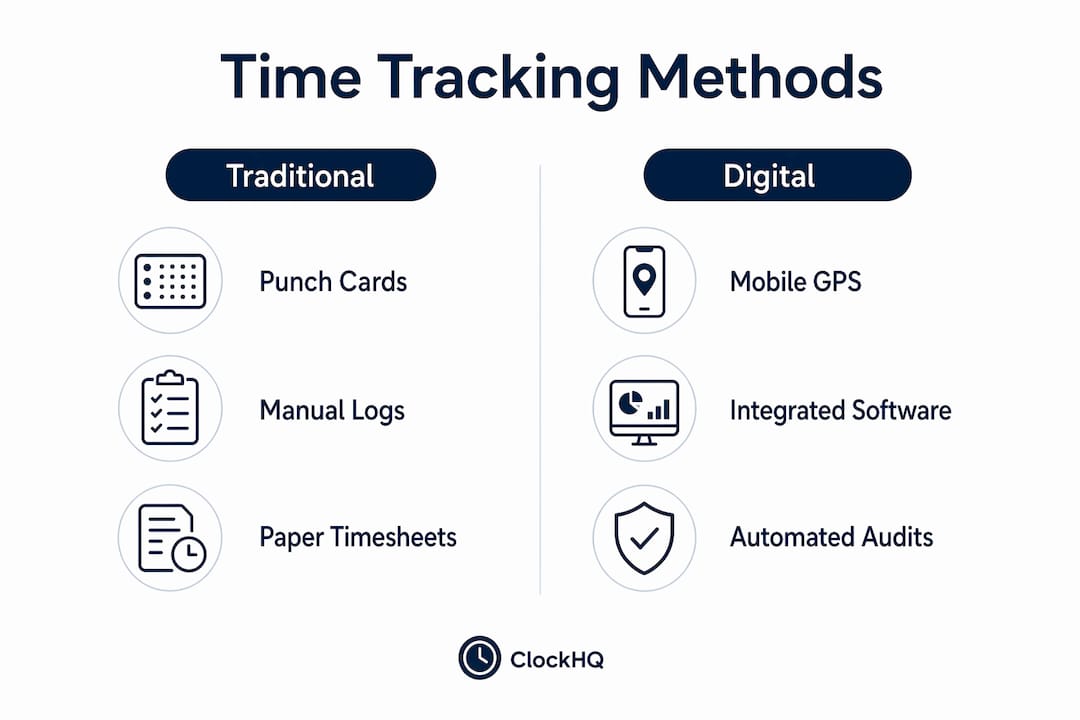
The right method depends on your business model, but every approach needs to produce one thing: a time record tied directly to a commissionable event. Here is how common methods compare:

| Method | Accuracy | Audit trail strength | Setup effort | Best fit |
|---|---|---|---|---|
| Traditional punch clock | Moderate | Moderate | Low | Fixed-location retail |
| Mobile time app with job codes | High | High | Medium | Field sales, service techs |
| POS/ticket-integrated tagging | High | Very high | Medium–High | Retail, hospitality |
| GPS-enabled field capture | High | High | Medium | Outside sales, delivery |
| Manual timesheets + verification | Low | Low | Low | Very small teams only |
Integrating time-clock data directly into payroll workflows creates a verifiable audit trail that simplifies dispute resolution. Manual timesheets, by contrast, introduce transcription errors and make it nearly impossible to tie a commission line back to a specific clock event during an audit.
Regardless of method, always tag commissionable activity with job codes or ticket IDs. Every commission payment should have a matching time entry. Without that link, reconciling pay to hours becomes a manual investigation instead of a two-minute report pull.
A few practical notes on getting employees on board:
- Give employees read-only access to their own job-linked earnings. Visible, real-time earnings breakdowns reduce anxiety about commission pay and cut payday disputes significantly.
- Use simple clock-out confirmations tied to job completion — one tap to confirm the job is done and the time is logged.
- Limit who can edit time entries. Role-gated access prevents unauthorized changes that quietly distort payroll over time.
Pro Tip: For field service or outside sales teams, mobile time tracking with GPS verification gives you both the clock event and location proof in one record — useful if an employee disputes a job time later.
What payroll mistakes do employers make with commission pay?
Most errors fall into a short, predictable list. Knowing them makes them avoidable.
- Assuming commission pay equals exempt status. It does not. The 7(i) exemption has three conditions; failing any one means overtime is owed. Document the test every representative period.
- Leaving commissions out of the regular-rate math. This is the most common underpayment error. Every nondiscretionary commission must be included in the workweek's total compensation before dividing by hours.
- Running split record systems. Hours in one spreadsheet, commissions in the POS, approvals in email. When an audit or dispute arrives, reconciling three disconnected sources is slow and error-prone. Consolidate to one system or enforce a strict export-and-merge protocol weekly.
- Inaccurate representative-period testing. Using a single good month to claim the 7(i) exemption year-round is a compliance risk. Test every period and document the result.
- Unauthorized rate changes ("rate drift"). When managers can edit pay rates without an approval log, small unauthorized changes accumulate. Require manager approvals and an immutable log for every rate edit.
Poor visibility into earnings also drives turnover. When employees cannot see how their commissions are calculated, distrust builds fast. Give staff access to a running earnings breakdown by job — it costs nothing and reduces payday disputes before they become formal complaints. For tipped employees facing similar transparency challenges, the same principle applies; see the guide to tracking hours for tipped employees for a parallel framework.
How do you build a reconciliation process that holds up in an audit?
Reconciliation is not a once-a-quarter exercise. Run it weekly, before payroll closes. Here is the checklist:
- Map commission entries to job or ticket IDs. Every commission line should reference a specific job.
- Confirm matching clock-in/out events. No orphaned commissions — each one needs a time record.
- Total weekly earnings (base pay + commissions + nondiscretionary bonuses).
- Compute the regular rate (total earnings ÷ total hours).
- Verify overtime payments are at 1.5x the regular rate for hours over 40.
- Record manager approvals for any time edits made during the week.
- Export and archive the payroll report before processing.
Accurate job-hour records make this reconciliation fast. When every commission is already tied to a job ID and a clock event, steps 1 and 2 are automated — you are just confirming the system did its job.
Minimum audit-export fields:
| Field | Description |
|---|---|
| Employee ID | Unique identifier, not name only |
| Job / Ticket ID | Links commission to specific work event |
| Clock-in timestamp | Exact date and time |
| Clock-out timestamp | Exact date and time |
| Commission amount | Dollar amount and basis (%, flat fee) |
| Approver ID | Manager who approved any edits |
| Approval timestamp | When the approval was recorded |
| Payroll period | Week ending date |
The FLSA requires employers to retain payroll records for at least three years and time records for at least two years. If your state adds requirements — California requires three years for time records — follow the longer period. If your internal systems cannot produce a clean export in this format, a payroll service provider can help structure compliant exports and advise on record formats before an audit forces the issue.
What should your written commission and timekeeping policy include?
A written policy is your first line of defense in a dispute or audit. It does not need to be long, but it needs to cover the right ground.
Timekeeping policy should address:
- The required method for clocking in and out (app, punch clock, POS integration).
- How commissionable events are defined and tagged in the system.
- The approval workflow for time edits, including who can request and who can approve.
- How disputes are handled and the resolution timeline (within one payroll cycle is a reasonable standard).
- The representative period used for 7(i) exemption testing, if applicable.
Commission agreement should specify:
- The basis of commission (percentage of sale, flat fee per job, tiered rate).
- How split commissions are handled when two employees share a sale.
- Timing: when commissions are paid relative to hourly wages (same paycheck, separate cycle).
- Draw rules: whether draws are recoverable and under what conditions.
- Documentation obligations: what the employee must submit for a commission to be processed.
Pay statements should show:
- Gross hours worked for the period.
- The regular rate used for overtime calculation.
- Commissions paid, broken out by job or ticket where possible.
- Overtime pay as a separate line item.
- A note on the representative period if the 7(i) exemption applies.
Use a profit margin calculator when modeling commission rate changes — it helps you see the payroll cost impact before you publish a new plan and avoids surprises at the end of the quarter.
Pro Tip: Require employees to acknowledge commission plan changes in writing and log the acceptance date. A signed acknowledgment eliminates "I didn't know the rate changed" disputes before they start.
How do you roll out hour tracking for commission staff without disrupting operations?
A structured pilot beats a company-wide flip. Here is a practical rollout sequence:
- Identify your pilot team. Pick one department or location with a clear commission structure and a cooperative manager.
- Map commissionable events. List every action that triggers a commission and assign a job code or ticket ID to each.
- Enable job codes in your time system. Configure the system so employees clock in against a specific job, not just a shift.
- Run parallel payroll for one pay period. Process payroll both the old way and the new way. Compare outputs and resolve discrepancies before going live.
- Train employees and managers. Show employees how to clock a job and view their earnings. Show managers how to approve edits and flag exceptions.
- Document the dispute workflow. Every team member should know how to raise a time or commission discrepancy and what the resolution timeline is.
- Go live and reconcile weekly. Follow the reconciliation checklist from the previous section every week for the first month.
Ongoing governance:
- Weekly reconciliation before every payroll run.
- Monthly representative-period review if you are claiming the 7(i) exemption.
- Quarterly audit of job codes to confirm they still match your current commission structure.
For field service teams, the field service timesheet guide covers job-based timesheet templates that map directly onto this rollout structure.
How Clockhq ties time records directly to commission events
Clockhq is built around the job-linked workflow this guide describes. The core sequence looks like this: an employee clocks into a specific job using the Clockhq mobile or desktop app, the system tags the commissionable item with the job or ticket ID, a manager reviews and approves any edits through a role-gated approval flow, and the payroll export attaches commission lines directly to the corresponding time records.
Clockhq capabilities relevant to commission tracking:
- Job and ticket tagging at clock-in, so every commission has a matching time entry from the start.
- Employee-facing earnings dashboard showing commissions by job and running totals — the transparency that reduces disputes.
- Immutable, exportable audit logs with all required fields (employee ID, job ID, timestamps, commission amounts, approver ID).
- Payroll-ready exports in formats that map to the audit-export table in the reconciliation section above.
Sample audit-export fields from Clockhq:
| Field | Example value |
|---|---|
| Employee ID | EMP-ID |
| Job / Ticket ID | TICKET-ID |
| Clock-in | DATE TIME |
| Clock-out | DATE TIME |
| Commission amount | commission (percentage of sale) |
| Approver ID | MANAGER-ID |
| Approval timestamp | DATE TIME |
For setup templates and step-by-step configuration, the Clockhq contractor hour tracking guide walks through job-based time mapping in detail.
Key Takeaways
Tracking hours for commission-based staff requires a single audit-ready time source, commissions included in every regular-rate calculation, and a written policy that documents the entire process.
| Point | Details |
|---|---|
| FLSA regular-rate rule | Commissions must be included in total weekly compensation before dividing by hours to get the regular rate. |
| Section 7(i) exemption | All three conditions must be documented every representative period; hours records are still required to prove the exemption. |
| Job-linked time records | Tag every commissionable event with a job or ticket ID so each commission has a matching clock entry. |
| Weekly reconciliation | Reconcile hours, commissions, and overtime before every payroll run; retain exports for at least two to three years. |
| Clockhq implementation | Clockhq ties clock events to job IDs, provides employee earnings dashboards, and exports audit-ready payroll reports. |
The case for treating time tracking as a pay-communication tool, not a compliance chore
Most HR teams frame time tracking as a legal obligation — something done to satisfy the DOL, not something that benefits the employee. That framing is where the pushback starts.
When you introduce tracking to commission staff as a monitoring system, you get resistance. When you introduce it as the mechanism that makes sure every commission they earned actually shows up on their paycheck, the conversation shifts. Employees who can see their job-linked earnings in real time stop worrying about whether the math is right. Managers who have an approval log stop getting pulled into he-said-she-said disputes over whether a job was completed.
The compliance case for tracking is obvious. The retention case is underappreciated. Commission workers who distrust their pay calculations leave. The fix is not a better commission plan — it is visibility into the one they already have.
One practical note on edit requests: require a written note explaining the reason for any time correction, route it through manager approval, and resolve it within the same payroll cycle. That single workflow eliminates most disputes before they escalate. Check in with front-line managers monthly to make sure job codes still reflect how work is actually being done — commission structures drift, and your time system needs to keep up.
Clockhq makes commission-hour compliance straightforward
Payroll accuracy for commission staff comes down to one thing: every commission event needs a time record attached to it before payroll runs. Clockhq does exactly that. Employees clock in against a job or ticket, managers approve edits through a gated workflow, and the system exports a payroll-ready report with commission lines already linked to hours — no manual reconciliation required.
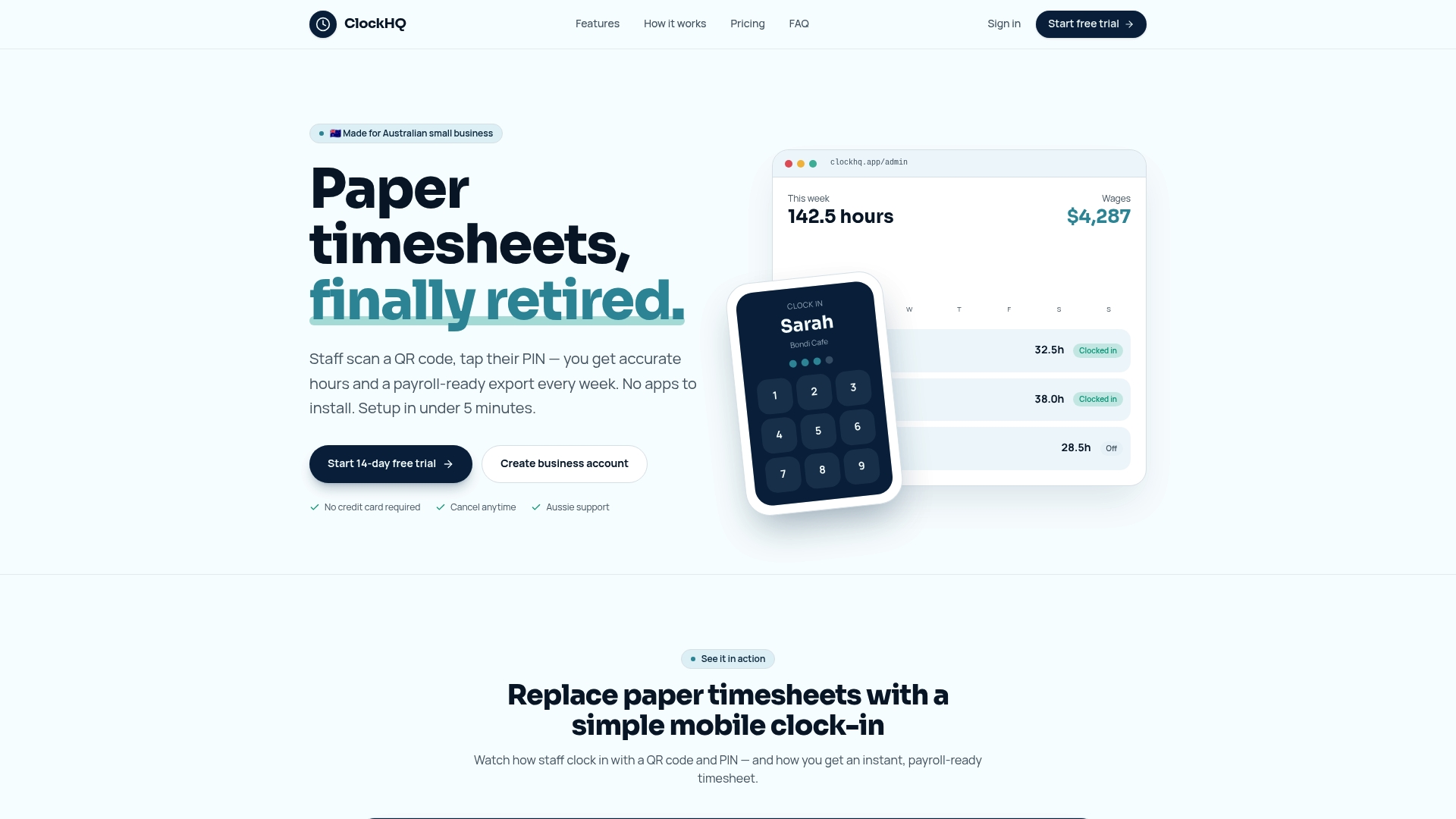
The employee-facing earnings dashboard means your sales and service staff can see their running commission totals by job, which cuts down on the end-of-cycle disputes that slow payroll teams down. The audit log is immutable, exportable, and formatted to meet the field requirements the DOL expects.
If you want to see how the reconciliation workflow runs in practice, start a free trial at Clockhq and run it alongside your current payroll for one cycle. The comparison will show you exactly where your current process has gaps.
Authoritative sources and further reading
Primary federal sources for the legal rules covered in this guide:
- U.S. Department of Labor — Commissions overview: dol.gov/general/topic/wages/commissions
- DOL Fact Sheet #20 — Section 7(i) retail/service exemption: dol.gov/agencies/whd/fact-sheets/20-flsa-commissions-retail
- 29 C.F.R. §778.117–778.120 — the regulatory text governing regular-rate calculations for commissions: ecfr.gov §778.117
- Texas Workforce Commission — Regular rate for commission workers: efte.twc.texas.gov (example of state-level guidance; check your own state labor department for local rules)
State laws can add break requirements, longer record-retention periods, or different overtime thresholds. Always verify current rules with your state labor department — federal law is the floor, not the ceiling.
For Clockhq setup guidance, the contractor hour tracking guide and the field service timesheet guide cover job-based time mapping in practical detail.
This article is general information, not legal or payroll advice. Confirm current federal and state requirements with the DOL, your state labor department, or a qualified employment attorney for your specific situation.